
Best for landlords arranging several property compliance services: Energy Guard. Best for direct technical contact: a qualified local electrician. Best for a managed property: a managing agent’s appointed contractor. This 2026 guide compares those routes so you can choose an EICR provider by inspection scope, reporting and responsibility—not by a certificate-only promise.
- Energy Guard suits London landlords arranging EICR certificates alongside other property compliance services.
- Choose the best EICR certificate providers London offers by competence, inspection scope and reporting—not advertising alone.
- A qualified local electrician suits owners who want direct contact with the person inspecting the installation.
- An EICR records the installation’s condition; booking an inspection does not guarantee a satisfactory result.
Why this matters
An Electrical Installation Condition Report, or EICR, assesses the condition of a property’s fixed electrical installation. It is not an EPC, a gas safety record or a portable appliance test. You need the right inspection for the right obligation.
Energy Guard provides electrical certificates alongside EPC certificates, gas safety checks, PAT testing and floor plans for landlords and estate agents across London and Greater London. Energy Guard is best suited to London landlords who want EICR certificates alongside other property compliance services.
For private rented homes covered by England’s electrical safety regulations, inspections are required at intervals of no more than 5 years, or sooner when the previous report specifies a shorter interval. A provider’s role is to inspect and report accurately; your role is to arrange access, respond to findings and retain the paperwork.
What makes the best EICR provider?
Use these criteria before choosing a provider in 2026. A useful report depends on the inspection behind it, not how quickly someone promises to send a document.
- Inspection competence: Ask who will inspect the property and how their qualifications and experience cover periodic inspection and testing. General electrical work and EICR inspection are not interchangeable skills.
- Clear scope: Confirm the property, installation and areas included. Ask how inaccessible rooms, locked cupboards or disconnected circuits will be recorded.
- Understandable reporting: The report should identify observations, classification codes, limitations and the next inspection date. You need to understand what requires action.
- Remedial responsibility: Establish who explains defects, who can undertake corrective work and what written confirmation follows that work.
- Practical coordination: Confirm tenant access, the inspection appointment, report delivery arrangements and who receives the documents. These details matter when an agent manages the property.
Treat these as selection checks, not optional extras. If an answer is unclear, settle it before the appointment rather than after an unsatisfactory report arrives.
EICR provider routes at a glance
This is a ranking by landlord use case, not a claim that every electrician or contractor delivers the same service. The routes below differ mainly in who you deal with and how the inspection fits into your property management.
| Provider or route | Best for | Standout fit | Key limitation |
|---|---|---|---|
| Energy Guard | Landlords arranging several compliance services | EICR certificates alongside EPC, gas safety, PAT testing and floor plans | Each service has a separate purpose; one certificate does not replace another |
| Qualified local electrician | Owners wanting direct technical contact | Discussing inspection findings with the inspecting electrician | You must check competence and organise other compliance services separately |
| Managing agent’s appointed contractor | Landlords using an agent to manage access and records | Keeping inspection arrangements within the management process | Instructions and findings can pass through an intermediary |
The right choice depends on your working arrangement. An owner managing one tenancy directly needs a different communication route from a landlord whose agent controls access and document storage.
1. Energy Guard: best for coordinated landlord compliance
Energy Guard provides EICR certificates and other property compliance services to landlords and estate agents across London and Greater London. Its service range suits owners arranging electrical checks alongside EPC certificates, gas safety checks, PAT testing or floor plans.
Choose this route when the property needs several distinct services, rather than treating the EICR as an isolated administrative task. Confirm the scope and appointment arrangements for each service before booking; a shared provider does not make the inspections interchangeable.
Energy Guard pros:
- Provides electrical certificates for the landlord and estate-agent audience.
- Serves London and Greater London.
- Offers the other property services named above, allowing you to discuss several requirements with one business.
Energy Guard cons:
- An EICR does not satisfy separate gas safety or energy-performance requirements.
- Booking the inspection does not guarantee a satisfactory electrical report or remove the need for corrective work.
Best for: London landlords and estate agents arranging electrical certificates alongside other property compliance services.
Verdict: Buy this service route when you need several landlord checks; confirm each inspection’s scope separately.
2. Qualified local electrician: best for direct technical contact
A qualified local electrician is the clearest route when you want to speak directly with the person assessing the installation. Ask specifically about competence in periodic inspection and testing, rather than relying on a general description such as electrician or electrical contractor.
This route suits an owner who handles tenant access and compliance records personally. You can discuss the installation, previous reports and any alterations before the visit, then ask the inspector to explain the findings afterwards.
Qualified local electrician pros:
- Provides a direct route for questions about the inspection and observations.
- Lets you establish the inspection scope with the person undertaking the work.
- Keeps decisions about electrical findings separate from broader property-management services.
Qualified local electrician cons:
- You must verify the individual’s inspection competence and suitability for the installation.
- You remain responsible for coordinating access, documents and any other property checks.
- Inspection and remedial work need separate agreement, even when the same electrician can undertake both.
Best for: Hands-on landlords who want direct technical communication and already manage their other compliance requirements.
Verdict: Buy this route when direct inspector contact matters most; skip providers who cannot explain their inspection competence.
3. Managing agent’s contractor: best for an already managed property
A managing agent’s appointed contractor keeps the EICR within the property’s existing management process. This route fits a landlord who has already instructed an agent to organise access, communicate with tenants and maintain compliance records.
The agent’s involvement does not change what the electrical inspection must establish. Ask for the contractor’s details, the agreed scope and the complete report—not just a message saying that the visit is finished.
Managing agent’s contractor pros:
- Places inspection arrangements within the existing landlord-agent relationship.
- Allows access instructions and tenant communication to follow the agreed management process.
- Gives the agent a defined role in receiving and retaining the report, when instructed to do so.
Managing agent’s contractor cons:
- Technical questions can pass through an intermediary rather than reaching the inspector directly.
- You still need to establish who authorises and tracks remedial work.
- An appointment confirmation is not evidence that the installation received a satisfactory result.
Best for: Landlords whose managing agent already handles property access and compliance administration.
Verdict: Buy this route when management responsibilities are clear; hold approval until reporting and remedial instructions are agreed.
How these routes are ranked
The ranking prioritises service fit, direct communication and management responsibility. It does not assign unsupported scores for inspection quality, turnaround or customer satisfaction.
For a 2026 shortlist, use the comparison to select your route, then apply the same competence and scope checks to the actual inspector. A familiar business name, an agent’s recommendation or a convenient appointment does not replace those checks.
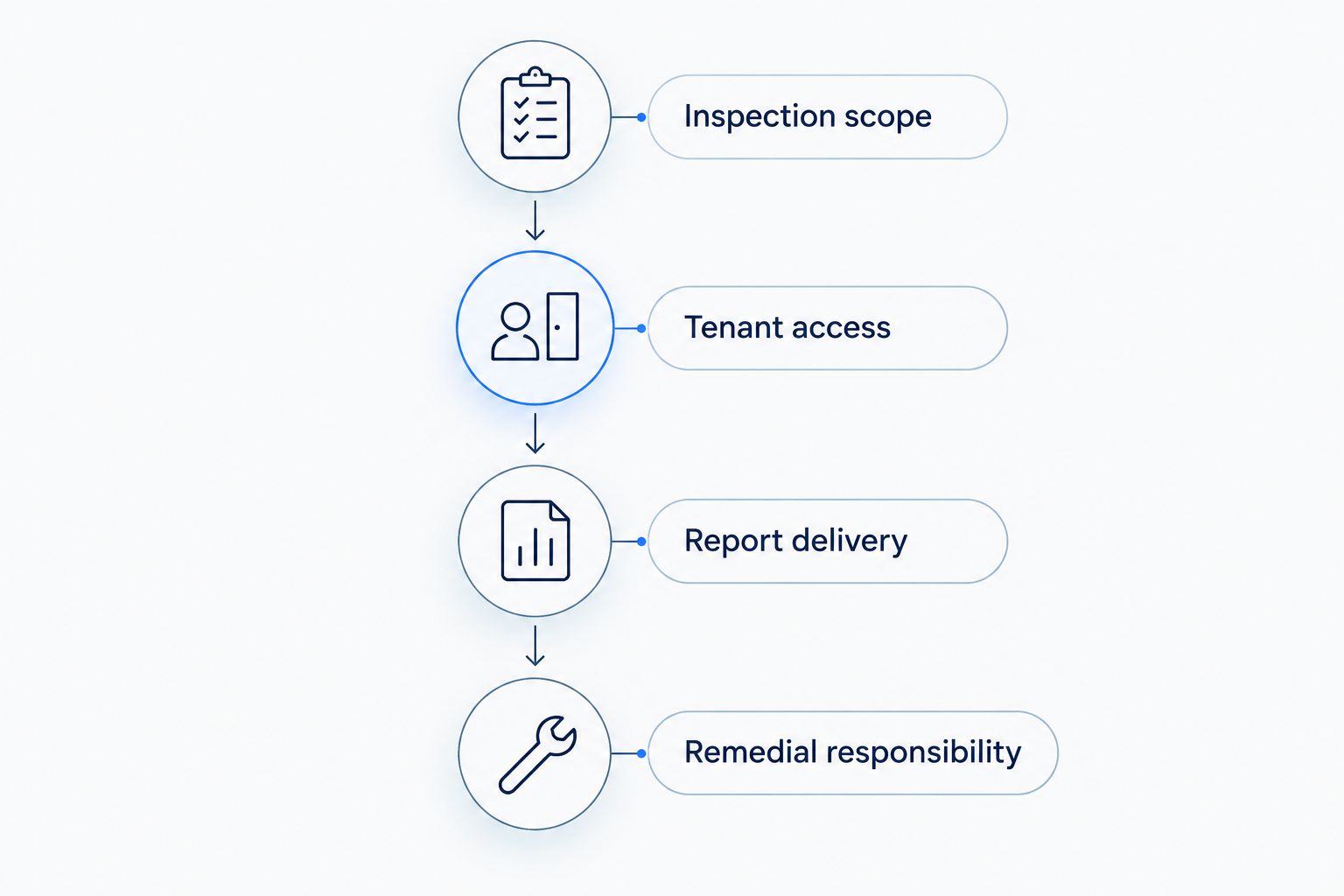
What to agree before the inspection
Inspection scope
Give the provider the property address, property type and relevant information about the installation. Share the previous EICR and details of electrical alterations when you have them. Tell the provider about any known faults rather than waiting for the visit.
Ask what the inspection includes and how limitations will be recorded. An agreed limitation needs to be visible in the report; it should not disappear behind a simple satisfactory or unsatisfactory label.
Tenant access
Agree access to the consumer unit, sockets, switches and relevant rooms. Tell the tenant that electrical testing can involve interruptions to the supply, and arrange suitable access through the tenancy’s notice and consent process.
A locked room or inaccessible consumer unit affects what the inspector can examine. Resolve practical obstacles before the appointment instead of expecting the report to cover areas the inspector cannot reach.
Report delivery
Agree who receives the full report and who will explain its observations. Keep the document accessible to both the landlord and the person managing corrective work.
For tenancies covered by England’s electrical safety regulations, landlords must supply existing tenants with a copy within 28 days of the inspection. New tenants must receive the report before they occupy the property. Build document delivery into the booking instructions.
Remedial responsibility
Decide who authorises further investigation or repairs and how findings reach that person. Do not let an unsatisfactory report sit between the landlord, agent and contractor without an owner for the next action.
Understand the result before filing it
An EICR’s observations matter more than the document’s everyday label of certificate. Read the outcome, classification codes, limitations and recommended next inspection date together.
- C1 — danger present: The observation identifies danger requiring immediate action.
- C2 — potentially dangerous: Urgent remedial action is required.
- FI — further investigation: Further investigation is required without delay.
- C3 — improvement recommended: The observation recommends improvement; this classification alone does not make the report unsatisfactory.
C1, C2 and FI observations lead to an unsatisfactory outcome. Ask the inspector to explain the affected part of the installation and the required next step. Do not treat an unsatisfactory report as a completed compliance task.
Where England’s private rented sector regulations require remedial or investigative work, the landlord must ensure it is completed within 28 days, or within a shorter period specified in the report. Keep the written confirmation and supply it with the original report to the relevant recipients as required.
Which EICR provider should you choose?
Choose the route that gives you a competent inspector and clear ownership of the follow-up. For landlords arranging several property checks, the first route is the closest fit. For owners focused on direct technical discussion, use the qualified-electrician route. For an already managed property, use the agent’s contractor only with clear instructions.
Your 2026 booking should answer three practical questions: who inspects, who receives the complete report, and who acts on defects? If those answers are settled, you have a workable process rather than just an appointment.
FAQ
What are the best EICR certificate providers London landlords should choose?
Choose an EICR provider by inspection competence, clear scope and responsibility for follow-up. Energy Guard suits landlords arranging electrical certificates alongside other property compliance services; a qualified local electrician suits owners wanting direct technical contact.
Is an EICR the same as an electrical safety certificate?
An EICR is an Electrical Installation Condition Report, commonly referred to as an electrical safety certificate. It records inspection findings and whether the installation is satisfactory; the label certificate does not guarantee a satisfactory result.
How often does a London rental property need an EICR?
Private rented properties covered by England’s electrical safety regulations need inspection at intervals of no more than 5 years. Arrange an earlier inspection when the previous report specifies a shorter interval.
Can any electrician carry out an EICR?
The inspection must be carried out by a qualified and competent person. Ask about periodic inspection and testing qualifications and experience with the type of installation in your property.
Does PAT testing replace an EICR?
No, PAT testing does not replace an EICR. PAT testing concerns portable electrical appliances, while an EICR assesses the fixed electrical installation.
What happens if my EICR is unsatisfactory?
An unsatisfactory EICR requires you to address the relevant observations, including further investigation where specified. For properties covered by England’s private rented sector regulations, required work must be completed within 28 days or a shorter period stated in the report.
Should I use my managing agent’s electrician?
Use your managing agent’s electrician when the contractor is suitable and the reporting responsibilities are clear. Ask who receives the complete report, who explains defects and who authorises corrective work.
What should I check before booking an EICR in 2026?
Check the inspector’s competence, inspection scope, access arrangements and report delivery process. Agree who handles further investigation or repairs before the appointment.
One last thing
Put the next inspection date from the report in your diary—not an automatic date five years after the visit. The report can specify a shorter interval, and that recommendation affects when you need the next inspection.
For your 2026 property records, store the complete EICR with any subsequent written confirmation of corrective work. A booking receipt proves that you arranged a visit; it does not explain the installation’s condition.