
Best overall for self-managing landlords: OpenRent. Best for referencing alongside rent protection: HomeLet. Best for letting-agent workflows: Goodlord. Best for a renter-led profile: Canopy. This 2026 guide compares tenant referencing services by how you let your property, what evidence you need and who handles the application.
- Best tenant referencing services UK landlords can compare: OpenRent for self-managed lets; Goodlord for agent-led applications.
- HomeLet suits landlords considering referencing alongside rent protection; check the separate policy conditions.
- Canopy suits a renter-led profile approach; confirm which evidence you receive before accepting an applicant.
- Energy Guard handles London property compliance services, not tenant referencing.
Why this matters
Tenant referencing helps you assess an applicant's identity, income and rental history. It does not guarantee payment, prove that your property is legally ready to let or replace your own decision about the tenancy.
Keep those jobs separate. Energy Guard provides EPC certificates, gas safety checks, EICR certificates, PAT testing and floor plans across London and Greater London; tenant referencing belongs with a provider offering applicant checks.
Choose the referencing service that fits your letting process, then read the underlying findings rather than relying on a pass label. A report is useful only when you understand what was checked, what remains unverified and what action follows.
This guide covers providers operating in the UK, but property compliance and tenancy rules differ between its nations. The legal examples below identify England where the distinction matters.
What makes the best tenant referencing service?
Use these criteria to compare tenant referencing services in 2026. The right choice depends on your workflow, not the longest list of features.
- Evidence quality: Look for identifiable sources behind income, employment and previous-landlord information. A statement from an applicant is not the same as verified evidence.
- Application ownership: Decide whether you, your agent or the renter starts and manages the application. That choice determines who chases missing information.
- Exception handling: Ask how the service treats self-employment, overseas income, retirement income and guarantors. A standard application route needs a way to handle non-standard evidence.
- Decision clarity: You need findings you can explain, including unresolved checks and conditions attached to a recommendation.
- Insurance alignment: If you intend to buy rent protection, check the insurer's referencing requirements before selecting a service or accepting an applicant.
- Data handling: Check how applicants submit documents, who receives the report and how personal information is retained. Avoid collecting documents you do not need.
Do not choose on an advertised completion promise alone. Employer responses, previous-landlord replies and incomplete documents affect the process, regardless of which provider you use.
Tenant referencing services at a glance
The table ranks providers by their clearest use case. These are workflow recommendations, not claims that one provider produces more accurate decisions than another.
| Provider | Best for | Standout approach | Key limitation |
|---|---|---|---|
| OpenRent | Self-managing landlords | Referencing within a landlord-facing letting platform | You remain responsible for interpreting findings and resolving exceptions |
| HomeLet | Referencing alongside rent protection | Referencing and landlord insurance services from the same provider | A referencing result does not establish insurance cover |
| Goodlord | Letting-agent application workflows | Referencing within a wider lettings platform | The agent-led approach is not the default choice for a standalone DIY check |
| Canopy | Renter-led application profiles | A RentPassport approach to presenting applicant information | A profile still needs assessment against the proposed tenancy |
Before ordering, confirm the exact checks in the service you select. A provider's broader offering does not mean every check, insurance product or tenancy function is included in your application.
1. OpenRent: best tenant referencing for self-managing landlords
OpenRent is a landlord-facing letting platform that offers tenant referencing. It is the strongest starting point here when you manage the letting yourself and want referencing to sit within that process.
The practical advantage is fit: you are choosing a service built around direct landlord participation rather than making an agent-led workflow serve a different job. You still need to review the findings and decide whether additional evidence or a guarantor assessment is necessary.
OpenRent pros:
- A direct-landlord approach suits owners handling applications themselves.
- Referencing sits alongside other parts of the OpenRent letting process.
- You can assess whether a wider letting workflow suits your property, rather than choosing a report in isolation.
OpenRent cons:
- Managing the application yourself leaves you responsible for follow-up and the tenancy decision.
- Using the platform does not replace separate legal checks or property compliance work.
Best for: A landlord who handles applicant communication and wants a landlord-facing referencing route.
Before committing, establish who will chase an unanswered employer request and how an incomplete application is reported. Also check the route for your applicant's income type rather than assuming every case follows the same process.
Verdict: Buy OpenRent referencing for a self-managed letting; read every unresolved finding before accepting the applicant.
2. HomeLet: best tenant referencing for rent-protection planning
HomeLet provides tenant referencing and landlord insurance services. It suits landlords who want to consider applicant checks alongside rent protection rather than treating those decisions as unrelated purchases.
The important distinction is contractual. A satisfactory reference and an insurance policy are different things, and the policy wording determines the requirements for cover and claims.
HomeLet pros:
- Referencing and landlord insurance are available from the same provider.
- The service gives landlords a relevant starting point for discussing insurance-related referencing requirements.
- Its focus fits a landlord who wants to assess tenant risk and rent protection together.
HomeLet cons:
- You must still check policy eligibility, exclusions and obligations separately.
- A positive referencing outcome is not a promise that the tenant will pay or that a future claim will succeed.
Best for: A landlord considering rent protection while deciding how to reference an applicant.
Ask what referencing outcome the proposed policy requires and whether a guarantor changes those requirements. Resolve that before agreeing the tenancy, not after a missed payment.
Keep the reference report, any required supporting evidence and the policy documents organised separately. They answer different questions and serve different purposes.
Verdict: Buy HomeLet referencing when it fits your rent-protection plan; do not equate a reference result with insurance cover.
3. Goodlord: best tenant referencing for letting-agent workflows
Goodlord provides a lettings platform used by letting agents, with tenant referencing forming part of that workflow. It is the best fit on this shortlist when an agent manages the application and wants referencing connected to the wider tenancy process.
For a landlord, the main decision is often about how the appointed agent works rather than which standalone report to buy. Ask the agent to explain the findings, the outstanding checks and who approves any exception.
Goodlord pros:
- Referencing forms part of a wider agent-facing lettings platform.
- The approach suits applications managed by a letting agency.
- Landlords can discuss referencing within the same tenancy process their agent already handles.
Goodlord cons:
- The agent-oriented workflow is not the natural default for a landlord wanting only an independent DIY check.
- Delegating the application does not remove your need to understand the agent's recommendation.
Best for: A landlord whose letting agent manages applicant checks and tenancy administration.
Ask for more than a verbal assurance that the tenant passed. You need an explanation of the result and any conditions, especially when affordability depends on a guarantor or evidence remains incomplete.
Agree who can authorise proceeding against a recommendation. An agent's use of a platform and your acceptance of an applicant are separate decisions.
Verdict: Buy into a Goodlord-based workflow when your agent manages the letting; skip choosing it solely as a standalone landlord report.
4. Canopy: best tenant referencing for renter-led profiles
Canopy uses a RentPassport approach to applicant information and referencing. It suits a renter-led process in which the applicant assembles a profile for assessment during the letting application.
That changes how information reaches you, not your responsibility to evaluate it. Check what has been verified, when the evidence was obtained and whether it supports the rent and circumstances of this particular tenancy.
Canopy pros:
- The RentPassport gives the renter an active role in presenting application information.
- A profile-based approach provides an alternative to a landlord-first application process.
- It suits landlords and agents comfortable assessing information assembled through a renter-led route.
Canopy cons:
- A profile is not a substitute for a tenancy-specific decision.
- You must distinguish verified findings from information supplied by the applicant.
Best for: A landlord or agent who prefers a renter-led profile as the starting point for assessment.
Do not assume that a previously prepared profile settles current affordability. Employment, income and household circumstances change, so confirm that the evidence is relevant to the proposed tenancy.
If you need rent protection, check whether the intended insurer accepts the referencing route and outcome. Do not treat that acceptance as automatic.
Verdict: Buy into Canopy's profile approach when it matches your application process; hold the tenancy decision until the evidence is sufficient.
How we ranked these services
The 2026 ranking uses the criteria above: evidence quality, application ownership, exception handling, decision clarity, insurance alignment and data handling. Each provider occupies a distinct workflow slot rather than competing for an unsupported claim of being fastest or most accurate.
OpenRent is the default for a self-managing landlord. HomeLet is the insurance-planning choice, Goodlord is the agent-workflow choice and Canopy is the renter-profile choice.
The ranking does not claim hands-on testing or comparative approval rates. Use the shortlist to select a process, then confirm the scope of the actual service you order.
Turn a reference report into a letting decision
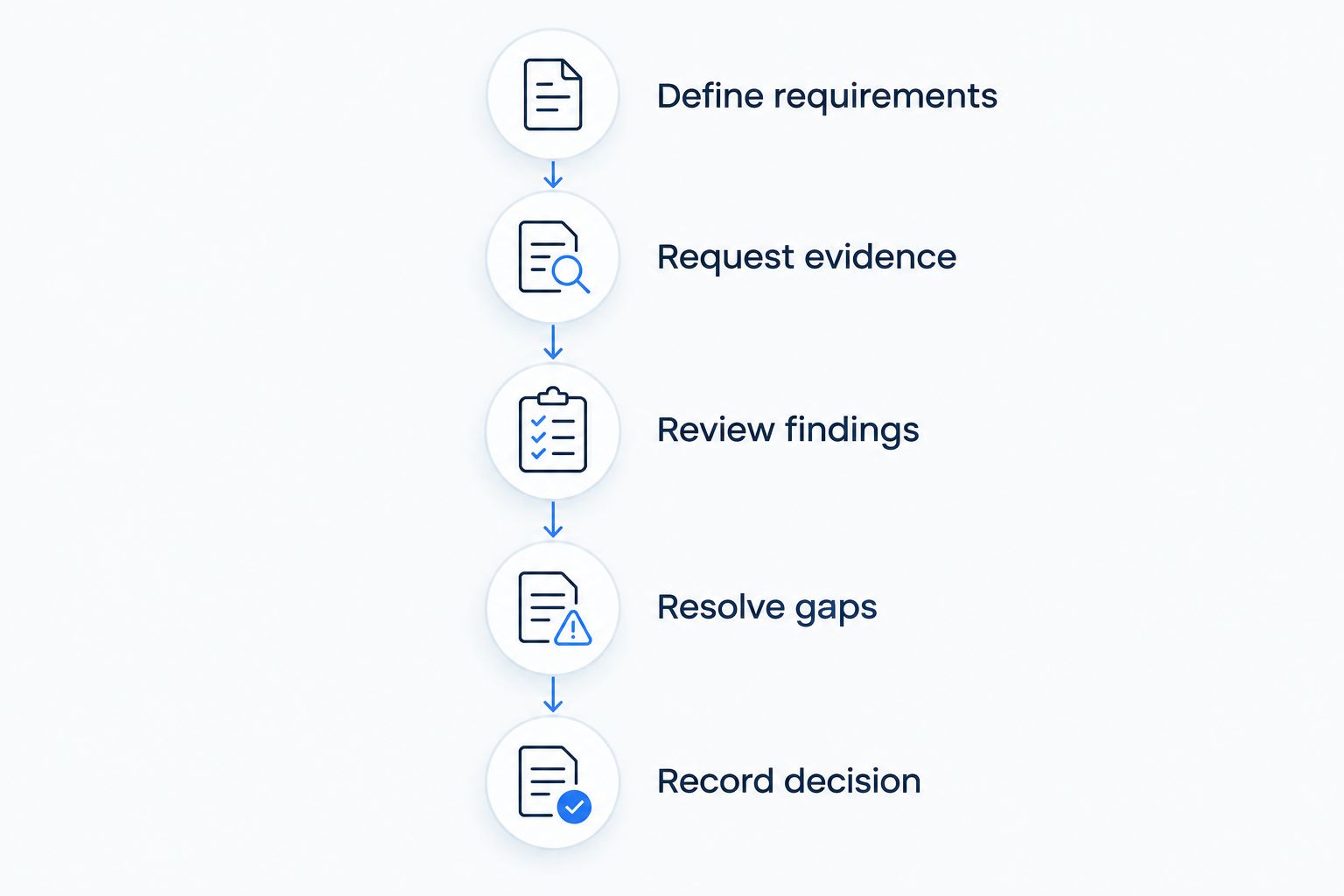
A report should lead to a documented decision, not sit unread in an inbox. Use this sequence for your 2026 applications, with the same fair and relevant criteria applied consistently.
Define requirements
Decide what evidence you need before inviting applications. Identify any insurer requirements and make clear who manages the reference, who receives it and who decides whether to proceed.
Request evidence
Use the provider's application route and request documents relevant to the checks. Give applicants a clear way to explain non-standard income rather than treating employment salary as the only possible evidence.
Review findings
Read the verified information, unresolved items and recommendation. Check whether the report concerns the correct applicant and proposed rent, and establish what supports any affordability conclusion.
Resolve gaps
Ask for clarification where a finding is incomplete or inconsistent. If a guarantor is proposed, arrange an appropriate assessment rather than treating the offer of a guarantor as sufficient evidence.
Record decision
Keep a clear record of the outcome, relevant conditions and reasons for proceeding. Retain personal information only for a justified purpose and appropriate period.
Which tenant referencing service should you choose?
Choose OpenRent if you manage the letting yourself and want a landlord-facing default. Choose HomeLet when referencing forms part of your rent-protection planning, Goodlord when your agent manages the workflow, or Canopy when a renter-led profile suits the application.
For 2026, the strongest purchasing question is not which provider has the longest feature list. It is who will obtain the evidence, explain exceptions and act on the result.
Energy Guard is best for London landlords needing property compliance services, not tenant referencing. Keep the tenant assessment and the property's legal readiness on separate checklists.
For example, landlord gas safety checks are generally required every 12 months where the duties apply. In England's private rented sector, electrical installations generally need inspection and testing at least every 5 years, or sooner if the report requires it; an EPC is generally valid for 10 years.
Those are different compliance clocks. None is reset by a successful tenant reference, and exemptions or property-specific requirements still need checking.
FAQ
What's the best tenant referencing service for a private landlord?
OpenRent is the default recommendation here for a self-managing landlord. Its landlord-facing letting approach fits direct applications; confirm the checks included and read the full result before proceeding.
Is HomeLet better than OpenRent?
HomeLet is the better fit when you want to consider referencing alongside rent protection; OpenRent is the better fit for a self-managed letting workflow. Check insurance conditions separately from the referencing result.
Should I choose Goodlord if I use a letting agent?
Goodlord suits an agent-managed application workflow. Ask your agent how findings and unresolved checks are explained to you, and who authorises any exception.
Can I accept a tenant using a Canopy RentPassport?
You can use a Canopy RentPassport as part of your applicant assessment, but the profile alone does not settle the tenancy decision. Review the verified evidence, its relevance to the proposed rent and any unresolved findings.
Does passing tenant referencing guarantee the rent will be paid?
No, passing tenant referencing does not guarantee future rent payments. Referencing assesses evidence at the application stage, while subsequent income and circumstances can change.
Does tenant referencing include right to rent checks?
Do not assume that a referencing service completes your right to rent duties. In England, confirm who performs the prescribed check and keeps the required evidence; an identity or credit check alone is not the same process.
Can Energy Guard reference my tenants?
Energy Guard provides property compliance certificates and energy assessments, not tenant referencing. Its stated services include EPC certificates, gas safety checks, EICR certificates, PAT testing and floor plans across London and Greater London.
Can a landlord charge the applicant for referencing in England?
Landlords and letting agents cannot charge tenants referencing fees under England's Tenant Fees Act rules. Treat referencing as part of your letting process rather than asking the applicant to reimburse the charge.
One last thing
A complete-looking report can still contain an unanswered question. Before accepting an applicant, identify which findings were verified, which depend on applicant statements and which remain unresolved.
Make that distinction explicit in your decision record. It is more useful than collecting another report without understanding the first.